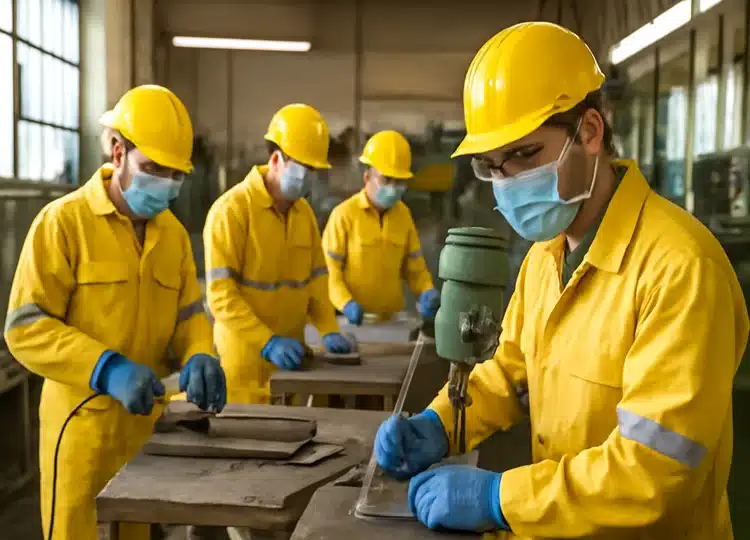

The criminal liability of family-owned SMEs in employment matters: the hidden risk behind a workplace accident
The culture of prevention in family-owned SMEs
In many family-run small and medium-sized enterprises (SMEs), the culture of prevention relies more on trust than on formal protocols.
“Here, everyone knows what needs to be done”
However, when a serious workplace accident occurs, that trust carries little weight: what matters before a judge is not what was known, but what can be proven.
Today, criminal, civil, and employment liability arising from workplace accidents is not limited to large corporations. Increasingly, medium-sized and family-owned companies are facing criminal investigations and damage claims for breaches of occupational risk prevention duties.
Family-owned SMEs and Article 31 bis of the Spanish Criminal Code
Since the 2010 reform, Article 31 bis of the Spanish Criminal Code (CP) provides that legal persons may incur criminal liability for offences committed for their benefit by their directors, managers or employees.
In employment-related contexts, the most relevant offences are:
- Offence against workers’ safety (Article 316 CP): failure to provide the necessary means to ensure that employees work under adequate safety conditions.
- Environmental offences (Articles 325 et seq. CP): discharges, emissions or waste management causing serious harm to the environment.
- Negligent injury or manslaughter offences: where they result from serious breaches of occupational health and safety regulations.
In practice, a workplace accident causing serious injury or death may give rise to three concurrent types of liability: criminal, administrative (Labour Inspectorate sanctions), and employment-related (Social Security surcharge or civil claim for damages).
Family-owned SMEs: beyond criminal liability
After a workplace accident, the financial consequences for the company extend far beyond criminal proceedings.
- Social Security surcharge (Article 164 of the General Social Security Act): if a lack of safety measures is proven, the company must pay a 30% to 50% surcharge on the Social Security benefits awarded to the injured worker. This surcharge is neither insurable nor delegable, and is imposed even if no criminal conviction ensues.
- Civil claim for damages: in addition, the employee (or their heirs) may bring a civil action for additional damages, claiming compensation for moral injury, loss of earnings, or permanent disability. Such action may be joined to the criminal proceedings, multiplying the company’s economic exposure.
Accordingly, a single accident may trigger three simultaneous fronts: criminal liability, Social Security surcharge, and civil compensation.
The family SME under scrutiny
Statistics from the Office of the Public Prosecutor are clear: most convictions for offences against workers’ safety occur in companies with fewer than 50 employees.
The recurring reason: the absence of a formal prevention structure.
A recent example is the Judgment of the High Court of Justice of Murcia, dated 8 July 2025 (appeal no. 1164/2024), which examined a serious workplace accident during cleaning work at height in Cartagena. The employee, using an extendable ladder without adequate safety measures, fell from nearly five metres, suffering permanent total incapacity.
The court confirmed the company’s liability for breaching the Law on the Prevention of Occupational Risks and Royal Decree 1215/1997 on Work Equipment, highlighting deficiencies in risk assessment, specific training, and supervision of PPE use.
The consequences were severe:
- 30% surcharge on Social Security benefits due to lack of safety measures.
- Civil liability for €161,649.84 in damages.
The conclusion is evident: trust does not exempt from liability. Only documented preventive measures and traceability of actions constitute a genuine defence.
How to shield family-owned SMEs: realistic labour compliance
The most effective approach is not to create bureaucracy, but to formalise existing practices.
A compliance system tailored to the SME should include:
- A labour risk map, identifying high-risk positions.
- Written procedures for training, supervision, and incident response.
- Formal appointment of safety officers and proper communication of delegations.
- Documented records of training, inspections, and corrective measures.
- An internal ethics or whistleblowing channel, potentially managed by a third party.
- An annual legal audit of the system, updated whenever machinery or staff changes occur.
Only in this way can the company demonstrate the “due diligence” required under Article 31 bis of the Criminal Code as a ground for exemption from criminal liability.
Environment and prevention: two sides of the same risk in family SMEs
In industrial, agri-food, or chemical sectors, environmental and occupational safety risks are closely linked.
A spillage, ammonia leak, or improper handling may simultaneously constitute an administrative infringement, an environmental offence, and an offence against workplace safety.
Integrating environmental management into compliance systems is therefore a sound corporate protection strategy.
Conclusion: prevention, traceability, and specialist advice
Twenty-first century employment law is, above all, risk management law.
A serious accident may expose a family-owned SME to sanctions that threaten its very continuity.
For this reason, occupational safety compliance is not a mere formality, but a strategic business asset.
A well-documented, regularly reviewed and legally robust system not only protects workers but also preserves the reputation and long-term viability of the business.
Do you need advice? Access to our areas related to the criminal liability of family-owned SMEs in employment matters: