
Permanent incapacity and professional sport
The end of a sporting career may entail a lifelong permanent incapacity pension: a key judgment
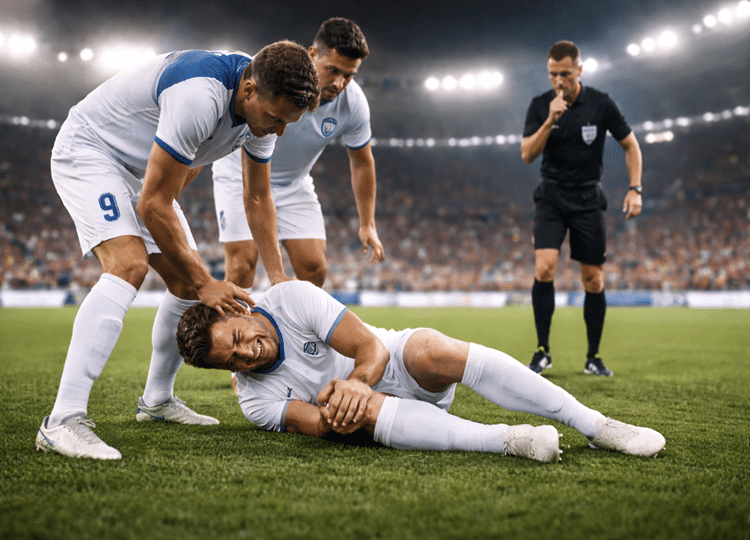
The careers of professional athletes, short but intense, characterised by extremely high and constant physical and mental demands, often mean that a considerable proportion of them end their careers, sooner or later, due to injuries and/or physical limitations.
When an injury alters the course of a sporting career, legal decisions can also make a difference.
Can an injury that forces retirement give rise to entitlement to a pension, regardless of the age at which it occurs?
Such was the case of a footballer who spent much of his career at Athletic Club, to whom the High Court of Justice of the País Vasco, in a judgment dated 15 January 2026, recognised the right to receive a monthly pension due to Total Permanent Incapacity (IPT) for the performance of his usual profession as a professional footballer.
Total permanent incapacity of a professional athlete
Total Permanent Incapacity is recognised when a person is unable to carry out the fundamental duties of their usual profession, although they still retain the capacity to engage in other occupations.
Moreover, the assessment must be carried out from a functional perspective, that is, by analysing whether the individual can perform their profession with normality, safety and sufficient efficiency. It is sufficient for the limitations to prevent the essential duties of the profession from being carried out under normal conditions for the person to be considered a candidate for Total Permanent Incapacity (IPT).
In this case, contrary to what was argued by the National Institute of Social Security, the judgment finds that the end of this professional athlete’s career was due not to age (which it considers irrelevant), despite the fact that he was 33 at the time of his retirement, but to medical advice resulting from his pain and physical limitations, which it deems incompatible with the level of performance required in professional football.
This is particularly relevant in the sporting sphere, where professional careers tend to be shorter than in other professions.
Amount of the total permanent incapacity pension
The lifelong monthly pension to which recognition of Total Permanent Incapacity for one’s usual profession generally gives entitlement is:
- 55% of the regulatory base up to the age of 55
- 75% for those over the age of 55
It may be higher in certain cases, such as when the club has breached its obligations in relation to occupational risk prevention, thereby causing the disabling injuries.
Although the above is the general rule, there are exceptions, such as the possibility of the pension being converted into a one-off lump-sum compensation.
Compatibility of total permanent incapacity with other employment
Another common question is: would the payment of the pension be suspended if I take up any other job?
We reiterate that the concept of Total Permanent Incapacity (IPT) relates to one’s usual profession. Therefore, save for certain exceptions, receipt of an IPT pension is compatible with undertaking a different occupation. What is essential, of course, is that the duties to be performed in the new role do not coincide with those that gave rise to the recognition of this incapacity.
Can any professional athlete apply for Total Permanent Incapacity?
This judgment opens the door to considering the future of incapacity within professional sport, raising the question of whether, if Total Permanent Incapacity is recognised when an athlete is unable to compete at the physical or mental level required in their profession, it could be claimed by anyone at an age typically associated with “retirement”.
What matters is being able to demonstrate that their physical or mental limitations prevent them from competing at the level required in their professional sport, always depending on the specific case and, in particular, on the injuries evidenced and their impact on the individual’s ability to carry out their profession.
However, this judgment undoubtedly provides a solid legal basis for considering options that professional athletes do not usually take into account, and it also demonstrates the importance of sound advice both during and at the end of their professional careers.
The extensive experience of Devesa in advising sports clubs and professional athletes, together with its expertise in employment and social security law as applied to professional sport, can be key to achieving the best possible end to your career.
Do you need advice? Access our area related to permanent incapacity and professional sport: